French Polynesia is a small population spread across 118 islands, with fresh water, waste handling and reef health that depend on careful management. Most of what makes a trip responsible here is practical rather than symbolic: where you stay, how long you stay, what you bring through the airport, what you buy and how you behave on the reef and at sacred sites. This guide sets out the choices that make the biggest difference, in roughly the order you'll meet them while planning.
Start with the shape of the trip
The single long-haul flight is the largest footprint of most visits, and it is the same whether you stay six nights or sixteen. Staying longer and moving less gives that flight more value. Each inter-island hop adds another flight or boat crossing, more luggage handling and another round of transfers, so two or three well-chosen islands usually beat five rushed ones. Our island-hopping guide shows how to sequence islands so connections stay direct.
Tahiti Tourisme's own tips for a sustainable stay make two further points worth taking seriously. Visiting outside the busiest periods eases pressure on popular islands and tends to mean better availability. And spreading a stay beyond the best-known names helps smaller communities: of the 118 islands, 13 are described as major tourist destinations across five archipelagos.
Choose where the money goes
A family-run pension on Huahine, Maupiti or an atoll in the Tuamotus keeps more spending on the island than a stay booked entirely through an international chain, and it usually comes with meals made from what the island produces. Our pensions and guesthouses guide explains what to expect. Larger resorts can be a sound choice too: Tahiti Tourisme notes that many hotels have adopted energy, water and waste measures, and some hold environmental labels. Ask a property what it actually does rather than relying on the word "eco" in its name.
Arrival rules that protect the islands
Isolation has kept French Polynesia free of many plant and animal diseases found elsewhere, and the territory's biosecurity directorate takes that seriously. Travellers arriving by air must declare products of plant or animal origin at the biosecurity counter. Undeclared items can be seized and destroyed, and fines apply. The directorate specifically flags poultry products, cured meats and seafood, including items bought legally in North America, Europe, Australia or New Zealand.
The simplest approach is to pack no fresh fruit, plants, seeds, soil, meat or seafood. Clean hiking boots and dive gear before you leave home, and declare anything you are unsure about rather than guessing. The same logic applies in reverse when you leave: check what your home country allows before buying plant-based souvenirs.
Water, energy and waste on small islands
On atolls and smaller high islands, fresh water may come from rain catchment or desalination, and rubbish has to be shipped away or managed locally. Short showers, reusing towels, switching off air conditioning when you go out and carrying a refillable bottle all matter more here than at home. Ask your host whether the tap water is suitable for drinking; where it isn't, a large container is better than a stack of small plastic bottles. Take your own packaging back from beaches and motu picnics, even if a bin is in sight, since bins on small motu are emptied by boat.
Make the visit respectful
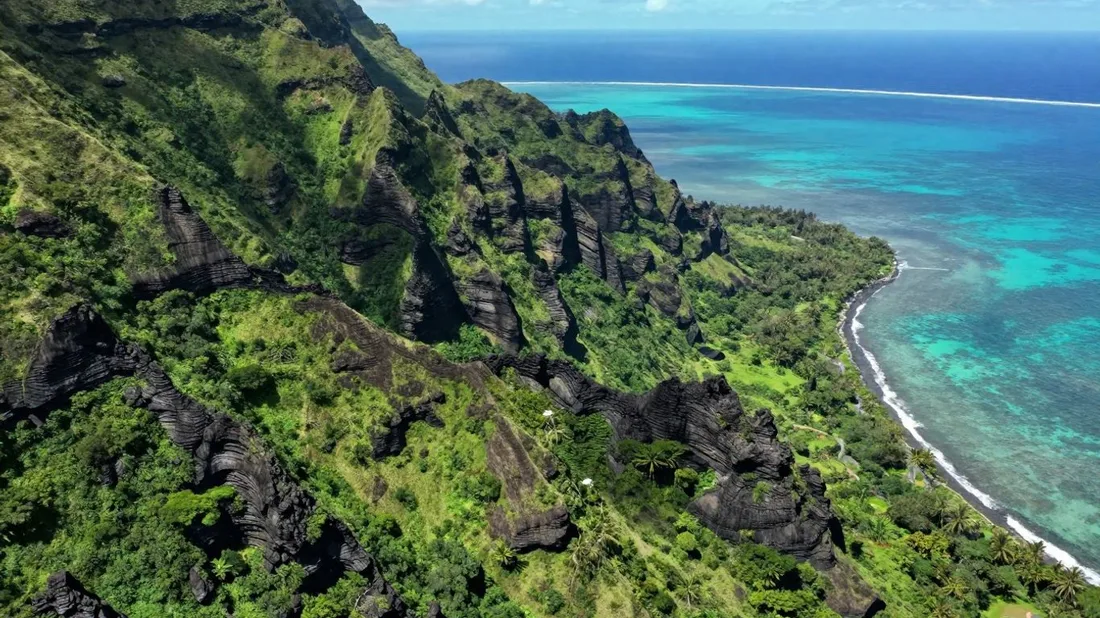
Respect here covers both nature and culture. In the water, the standing rules are simple: don't touch, chase or feed wildlife, keep fins off the coral and use a reef-safe sunscreen or a rash vest. Tahiti Tourisme also asks visitors not to take shells as souvenirs and to buy local crafts instead.
Sacred sites
Marae, the stone ceremonial sites found across the islands, remain sacred places. At Taputapuātea on Raiatea, a UNESCO World Heritage site, Tahiti Tourisme publishes visitor rules that work well at any marae: stay on the paths, never climb on the stones, keep noise down, take your rubbish with you and don't treat the site as a picnic spot. Some places are tapu, and it is right to ask permission before entering. A local guide adds context and makes sure you are welcome; see our guide to visiting ancient marae.
Everyday courtesy
Outside resort areas, dress modestly in villages and shops and keep swimwear for the beach. Ask before photographing people, homes or church services. Learning two words goes a long way: 'Ia ora na (hello) and Māuruuru (thank you). Sunday is a family and church day on many islands, so expect quieter roads and some closed businesses.
Common planning mistakes
Over-scheduling is the most common one. A day of back-to-back tours leaves no time for the slower moments that connect visitors with a place: a market morning, a conversation with a host, a walk to a village church. Another is assuming every boat trip or wildlife show is run the same way. Ask how group sizes are managed and whether animals are fed.
Accessibility and individual needs

Responsible choices shouldn't make a trip harder for anyone. Travellers with reduced mobility may find a well-equipped resort, with level paths and assisted boat boarding, more suitable than a remote pension, and that is a perfectly sound choice. Ask about step-free rooms, jetty access and transfer boats before booking. Families can teach children the reef rules on day one and make a game of spotting fish without touching anything.
Buying local
Markets are the easiest place to support growers, fishers and artisans directly. Papeete's municipal market sells produce, flowers and crafts from all five archipelagos, and smaller islands have roadside stalls selling fruit, vanilla and handmade pieces. Our guide to local markets covers what to look for. Buy pearls from established farms or shops that explain grading clearly, and choose pareu, carvings and weaving made in the islands rather than imported copies.
Giving something back
Tahiti Tourisme runs the HINA Fund, which channels visitor donations to environmental, cultural and community projects. Locally, some guesthouses and dive centres organise reef clean-ups or support conservation work; ask what is happening during your stay. Sharing honest reviews of the small operators who looked after you is a practical help too.