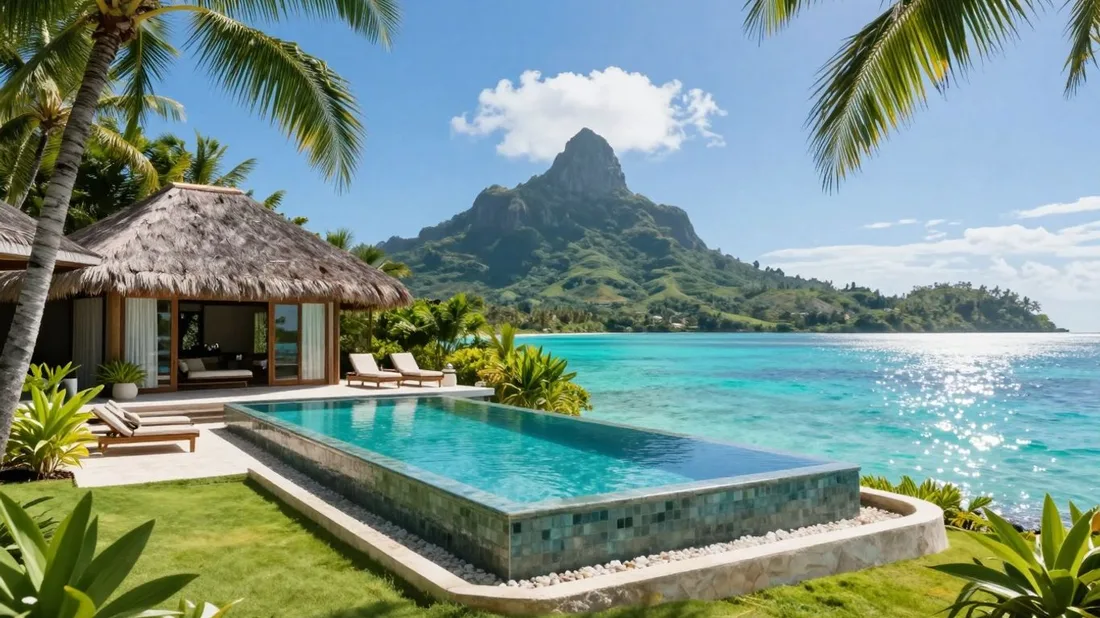
Luxury travel in French Polynesia can mean an overwater suite, a private-island stay or a chartered lagoon day, but price alone does not create a well-designed trip. The more useful definition is personal: privacy, excellent service, distinctive food, effortless transfers, access to the water, a dramatic view or simply enough unstructured time to enjoy the islands.
A successful itinerary combines memorable accommodation with careful pacing. It selects islands for their differences, confirms the details that matter within each room category and protects the journey from avoidable connection stress. Bora Bora may provide the iconic lagoon anchor, while Moorea, Taha’a or a Tuamotu atoll adds scenery, culture, diving or quiet in a different form.
Define what luxury means for this trip
Begin with priorities rather than resort names. Decide whether the main objective is seclusion, snorkeling from the room, spa time, fine dining, diving, sailing, cultural exploration or a milestone celebration. Rank the few features that must be exceptional and identify where simplicity is welcome. This prevents paying for prestige that does not improve the traveller’s actual experience.
Also discuss pace and independence. Some travellers want a full-service motu resort and do not expect to leave it often. Others prefer a beachfront villa near restaurants, a rental car on Moorea or a boutique property that supports island exploration. Accessibility, swimming ability, dietary needs and comfort with boats should be part of the choice, not afterthoughts once a deposit is paid.
Bora Bora as an iconic luxury anchor
Bora Bora has the destination’s most familiar combination of Mount Otemanu, turquoise lagoon and high-end resort lodging. Official destination information lists overwater bungalows, five-star resorts, spa experiences, lagoon tours, sunset cruises and aerial sightseeing among its options. That range makes the island suitable for travellers who want established services and a highly recognizable setting.
The word luxury does not make every Bora Bora room equivalent. Compare view direction, deck exposure, water depth, ladder access, privacy, distance from restaurants and whether the unit faces boat traffic or prevailing weather. Many resorts are on motu, so airport boats and trips to the main island may add time or cost. Confirm the precise room and transfer arrangement rather than relying on a representative photograph.
Moorea for scenery, variety and accessibility
Moorea pairs lagoon time with volcanic scenery, road touring, hiking and a broad range of accommodation. Its ferry and flight connections from Tahiti can make it a practical first stop after an international arrival. Travellers can alternate polished resort days with Opunohu Valley, viewpoints, local food, beaches and guided lagoon activities instead of staying entirely within one property.
Luxury on Moorea may come from flexibility: a spacious villa, a well-located resort or a private guide chosen for a particular interest. Check where the property sits in relation to restaurants and planned activities, because a beautiful room can still require lengthy transfers. Moorea often complements Bora Bora, but it deserves the longer stay when land exploration is a central priority.
Taha’a for a quieter lagoon setting
Taha’a shares a lagoon with Raiatea and combines motu lodging with coral-garden snorkeling, vanilla farms, pearl farms and a slower island rhythm. Tahiti Tourisme notes that the island has guesthouses, hotels and a luxury resort on a motu. It can work well for travellers who want a small-scale lagoon stay without making every day a formal excursion.
Taha’a has no airport of its own, so access includes a boat connection from Raiatea or another specific arrangement. Confirm which transfer is included, its operating hours and how dining away from the accommodation works. A secluded location is valuable only when it matches the traveller’s desired routine; those expecting spontaneous restaurant choices may prefer a different base.
Tuamotu atolls for ocean-focused luxury
Rangiroa, Fakarava and Tikehau offer atoll landscapes and a trip in which the ocean is the main event. Rangiroa and Fakarava are especially relevant to experienced divers, while Tikehau can support a quieter lagoon stay. Accommodation and service levels vary, so a remote setting should not automatically be described as five-star or fully inclusive.
Atoll flights, boat transfers and weather require more deliberate planning than a simple resort comparison suggests. Divers should select operators for experience level and current conditions, schedule suitable surface intervals before flying and provide worthwhile alternatives for non-diving companions. The luxury is often access and remoteness rather than an extensive menu of facilities.
Choose the room, not just the property
Overwater suites differ in age, layout, shade, view, depth and direct-swimming conditions. Beachfront villas can offer more interior space, sand access and easier movement for some guests. Garden or hillside categories may retain the same restaurants, spa and service at a lower price. Compare floor plans, recent photographs and accessibility with the actual category available on the dates.
Private-island properties emphasize separation and controlled surroundings, while a resort-within-a-resort category may create added privacy inside a larger property. Ask what is exclusive—pool, beach section, lounge, dining or concierge—and what is shared. Terms such as private, butler and club level are property-specific; they should be translated into concrete services before booking.
Plan private experiences selectively
A private lagoon charter can be a meaningful upgrade because timing, activity level and stops can be adjusted to the group. Confirm boat style, shade, guide, snorkeling equipment, food, mobility support and weather policy. Marine-life encounters are never guaranteed, and a responsible operator will follow safe viewing practices rather than promise particular animals.
Spa treatments, private dinners, photography, room decoration and aerial sightseeing can also be added where available. Each is subject to operating schedules, weather or advance booking. Choose a few experiences that reflect the travellers instead of filling every day. Free time is part of a luxury itinerary, especially after a long flight, an early transfer or an active lagoon day.
Dining, dietary needs and meal plans
Food planning is particularly important at isolated resorts, where alternatives may require a boat. Compare breakfast, half-board and full-board inclusions; note beverages, special dinners and transfer costs; and decide whether leaving the property is practical. Share allergies and dietary requirements in advance, then reconfirm them locally because ingredient availability and kitchen arrangements vary.
A private meal can create a special setting, but wind or rain may move it indoors. The food, service and flexibility matter more than a guaranteed sunset. On islands with independent restaurants, balance resort dining with local options and reserve only the meals that need it. This creates variety without turning the itinerary into a rigid sequence of reservations.
Make transfers feel considered
Most journeys begin at Faa’a International Airport on Tahiti. From there, islands may be reached by domestic flight, ferry or property boat. Build the sequence around real connection times, baggage rules and the final transfer to the accommodation. An arrival night on Tahiti can be useful when an international flight does not align safely with an onward service.
Avoid one-night island stays and complicated same-day chains simply to add another destination. Two contrasting islands can feel more complete than four rushed stops. Allow a suitable buffer before the international departure, especially after a remote atoll or boat-dependent stay. Premium transfers may be available, but they do not remove weather, schedule or baggage constraints.
Budget for the whole luxury journey
Compare total cost rather than the headline room rate. Include international and domestic travel, boats, meals, drinks, activities, taxes, insurance, cancellation terms and any resort-specific fees. A remote room can require an obligatory transfer and meal plan; a less expensive category at the same resort may preserve the services that matter while funding a private excursion.
Spend disproportionately on the traveller’s top priorities. A split stay may provide several overwater nights without placing the entire trip in that category. Confirm deposits, currency, change penalties and refund conditions using the live quotation. Published package prices and promotional inclusions change, so they should inspire questions rather than serve as a final budget.
Choose timing around priorities
French Polynesia is warm year-round, with seasonal changes in rainfall, humidity and trade winds. No travel window guarantees cloudless skies or calm water. Match dates to the island mix and planned activities, then build alternatives for weather. Diving, wildlife interests and sailing can require more specific timing than a general luxury stay.
Earlier planning helps when dates are fixed or the trip depends on a small number of premium rooms, inter-island flights or private services, but there is no universal booking deadline. Use current availability and terms. The goal is not to reserve every possible upgrade; it is to secure the elements that define the trip while preserving room to experience the destination.
Compare overwater bungalow choices
Consider a versatile Moorea stay
Frequently asked questions
Which French Polynesian island is best for luxury travel?
Bora Bora offers the broadest iconic resort and lagoon experience, Moorea adds land-based variety, Taha’a emphasizes quieter motu stays, and the Tuamotus suit ocean-focused travellers. The best island depends on the services, pace and activities that matter most.
Is an overwater bungalow always the most luxurious choice?
No. A beachfront villa may offer more space and easier beach access, while another category can provide the same resort services at better value. Compare the exact room’s privacy, view, water access, location and condition.
How many islands should a luxury French Polynesia trip include?
Two islands often provide useful contrast without excessive transfers. Three may work on a longer trip with sensible connections. The itinerary should protect time at each property rather than maximize the number of stops.
What luxury upgrade makes the biggest difference?
It depends on the traveller. A private lagoon day can add flexibility, while others value a particular room view, spa time, dining or a smoother transfer. Choose the upgrade that supports the trip’s top priority.
Are private transfers and meals included at luxury resorts?
Not automatically. Motu boats, airport transfers, meal plans, private dining and activities are property- and rate-specific. Confirm every inclusion, operating time and cancellation term on the live quotation.
When should a luxury French Polynesia trip be booked?
Plan earlier when dates are fixed or a specific premium room, flight or private service is essential. There is no universal deadline, so use current inventory, prices and terms rather than generic booking claims.