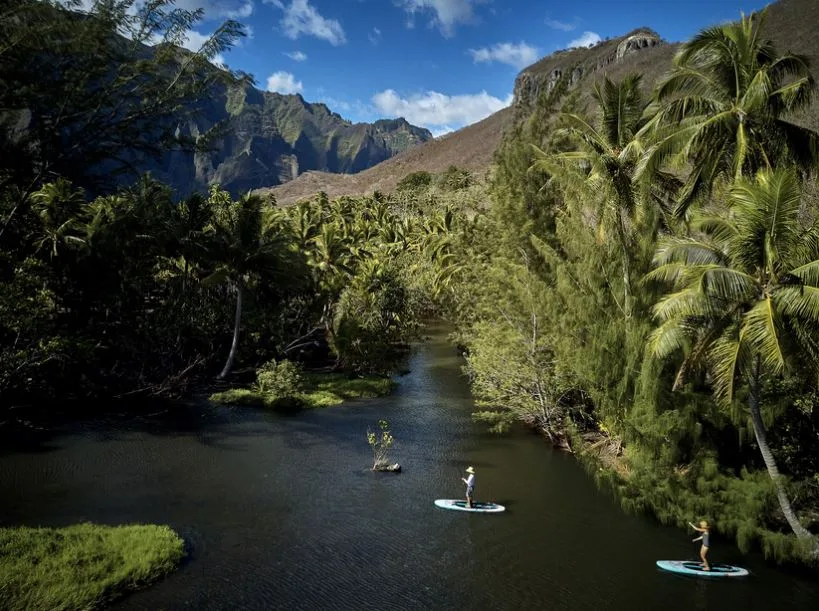
Nuku Hiva brings a very different side of French Polynesia into an island itinerary. Instead of a lagoon-ringed resort landscape, visitors find volcanic ridges, deep valleys, bays, black-sand beaches and a strong Marquesan cultural presence. It is the largest of the Marquesas Islands and the archipelago’s administrative center, but its scale and rugged terrain still make careful planning important.
This is a rewarding choice for travelers who value land-based exploration, archaeology, walking, photography and locally guided cultural context. It is not an island to race through. Roads can be steep, distances feel longer than they appear, and many of the places that give Nuku Hiva its character are best understood with a knowledgeable guide.
Why visit Nuku Hiva?
Tahiti Tourisme describes Nuku Hiva as a meeting of nature and culture, with valleys, waterfalls, mountains, archaeological remains and living arts. That combination is the island’s real strength. A day may move from a high viewpoint into a village and then to a ceremonial site, with the landscape and history connected rather than treated as separate attractions.
Nuku Hiva also makes a practical anchor for a broader Marquesas journey. It can be paired with Hiva Oa for a deeper cultural itinerary or followed by a Tuamotu atoll when travelers want lagoon time after active days on land. Because inter-island transport takes time, the trip works best when the island sequence is built around current schedules instead of a long wish list.
Taiohae and the settled side of the island
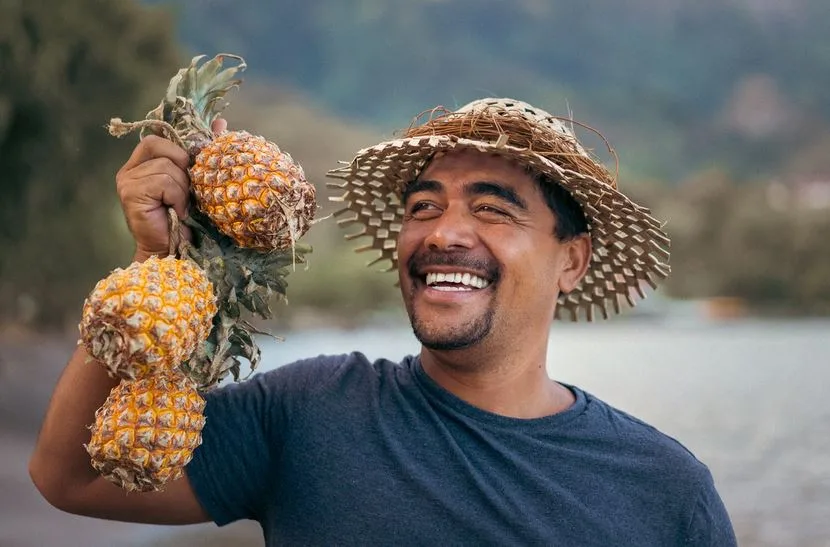
Taiohae is the main village and the usual base for visitor services, guides and island touring. Its broad bay and surrounding slopes provide an immediate sense of Nuku Hiva’s scale. Time in and around the village can include the waterfront, churches, craftwork and conversations that help place the island’s archaeological and artistic traditions in context.
Do not assume urban-style convenience. Restaurant, shop and activity hours can be limited, and transport should be arranged around the chosen accommodation. Ask about meals, payment options, guide pickup and evening movement before arrival. These practical details are simple to solve in advance and allow the quieter pace to remain part of the experience.
Archaeological and cultural sites
Nuku Hiva has important ceremonial platforms, ancient village remains, carved stone and cultural landscapes. Tahiti Tourisme identifies sites around Hatiheu and elsewhere on the island, but a list of names alone does not explain their meaning. A local guide can add historical context, explain respectful conduct and help visitors distinguish sacred or sensitive places from ordinary sightseeing stops.
Marquesan carving, tattoo, dance and craft traditions are living practices, not museum decoration. Buy directly from artisans when possible, ask before photographing people or ceremonies, and follow guidance at cultural places. Travelers gain more from these encounters when they approach them as opportunities to learn rather than as performances arranged solely for visitors.
4x4 touring, valleys and viewpoints
A guided 4x4 day is one of the most effective ways to understand Nuku Hiva’s geography. Routes climb through high country and descend toward valleys and bays, sometimes combining viewpoints, archaeological stops, villages and a meal. Road condition and weather affect what is practical, and the Marquesas transport guidance notes that steep or rough roads make guided touring preferable for many visitors.
Discuss mobility, motion sensitivity and the amount of walking before choosing a tour. A full island day can be long, while a focused valley or cultural route may suit travelers who prefer a slower pace. The best tour is not necessarily the one with the most stops; it is the one that allows enough time to understand the landscape and local context.
Hiking and waterfalls
Nuku Hiva is one of French Polynesia’s strongest hiking destinations. Trails may cross valleys, climb steep terrain or lead toward waterfalls and archaeological areas. Tahiti Tourisme highlights Hakaui and Vaipo among the island’s notable landscapes. Access, river conditions and trail difficulty can vary, so current local advice matters more than a generic description of a route.
Use a qualified local guide for demanding or unfamiliar hikes. Explain fitness, balance, footwear and any medical limitations honestly. Carry water and sun or rain protection appropriate to the day, and accept that weather may require changing the plan. Some remote bays and valleys may also be approached by boat when sea conditions and local arrangements allow.
Water activities and coastal experiences
Although Nuku Hiva is best known for land and culture, its coast supports swimming, snorkeling, kayaking, diving and boat trips in suitable places and conditions. The experience differs from the sheltered lagoons of the Society or Tuamotu Islands. Select operators based on local knowledge and safety practices, and do not assume every beach or bay is appropriate for independent swimming.
Wildlife encounters are possible but never guaranteed. The trip remains worthwhile without building the itinerary around a promised species. A coastal outing can instead focus on the scale of the cliffs and bays, the approach to a remote community, or a different perspective on the island’s volcanic landscape.
Getting to and around Nuku Hiva
Most visitors reach Nuku Hiva by domestic air from Tahiti. Flight frequency, routing and inter-island connections should be confirmed for the actual dates. The airport is in the north of the island, while Taiohae is in the south, so the arrival transfer is a substantial cross-island journey rather than a quick hotel shuttle. Arrange it with the accommodation or a trusted local provider before departure.
Rental vehicles may be available, but steep roads and changing conditions make guided transport a sensible choice for many touring days. Confirm baggage limits, transfer timing, meals on arrival and what happens if a flight changes. When linking Nuku Hiva with Hiva Oa or another archipelago, allow enough margin to protect the important parts of the trip.
Where to stay
Nuku Hiva offers hotels, family-run Tahitian guesthouses and visits by small ship or catamaran. Staying in or near Taiohae generally simplifies access to services and tour departures. A hillside or bay-view property may provide more quiet and scenery but require planned transport for meals and activities. More locally rooted guesthouses can be especially rewarding for travelers comfortable with simpler facilities.
Compare location, meals, airport transfer, guide pickup, room cooling, connectivity and mobility requirements—not only the view. Accommodation supply is smaller than on Tahiti or Bora Bora, so availability may shape the itinerary. Clear expectations are more useful than labels such as luxury or authentic.
When to visit and how long to stay
Nuku Hiva can be visited in different seasons, but rainfall, heat, trail conditions and sea access vary. Ask local guides and accommodations about the activities that matter for the intended dates. No period guarantees dry trails or uninterrupted transport. A flexible day is valuable when hiking or a remote excursion is central to the trip.
There is no fixed ideal stay. Allow enough time for arrival and departure, a major 4x4 or cultural tour, at least one active day and a slower period around Taiohae. Travelers planning demanding hikes or multiple valleys need more flexibility. Current flight schedules and the desired pace should determine the number of nights.
Combining Nuku Hiva with other islands
Hiva Oa is the clearest companion for a Marquesas-focused itinerary, with different archaeological and artistic associations. Tahiti or Moorea can add easier gateway logistics and a mountain-and-lagoon contrast. Rangiroa, Fakarava or Tikehau can provide an atoll chapter after the land-based Marquesas experience. Keep the sequence realistic: fewer well-chosen islands usually produce more meaningful time in each place.
Explore Hiva Oa in the Marquesas
Compare a Tuamotu stay in Rangiroa
Frequently asked questions
What is Nuku Hiva best known for?
Nuku Hiva is known for rugged valleys and bays, waterfalls, hiking, archaeological landscapes and living Marquesan culture. Guided touring helps connect these elements.
How do you get to Nuku Hiva?
Most visitors use a domestic flight from Tahiti. The airport and Taiohae are on different sides of the island, so arrange the substantial ground transfer before arrival.
Do you need a guide on Nuku Hiva?
A guide is strongly useful for archaeological context, demanding hikes and touring on steep or rough roads. The right arrangement depends on fitness, interests and current conditions.
Where should first-time visitors stay?
Taiohae is generally the most convenient base for services and tour departures. View-focused or more remote stays can work when meals and transport are arranged.
Can Nuku Hiva and Hiva Oa be combined?
Yes. They form a natural Marquesas pairing, but current flight or vessel schedules should determine the order and amount of time on each island.