Independent, lower-cost travel in French Polynesia is possible, but it is not backpacking in the overland sense. The islands are spread across an area the size of Europe, and the big costs are fixed: international flights, inter-island transport and a bed. What you control is how many islands you visit, how long you stay, and where you eat.
Before you go
Canadian citizens can stay up to 90 days without a tourist visa, but the Government of Canada advice notes that officials may ask for a return or onward ticket and proof of sufficient funds. Arriving on a one-way ticket with a loose plan is a real risk. Travel insurance that covers medical evacuation matters more on remote islands; see our travel insurance guide.
Where to sleep
Family-run pensions are the backbone of budget travel. Many include breakfast or half board, which matters on islands with few shops, and the hosts often arrange airport or ferry pickup themselves. A few properties offer dormitory beds or simple bungalows. Our pensions and guesthouses guide covers what to ask. Camping options are limited, and much land is family owned, so only pitch a tent at an established campground or with the owner’s permission.
Getting around on a budget
On Tahiti
The Tere Tahiti bus network runs around the island, with services from about 5 am until 5 pm and fares based on distance, according to Tahiti Tourisme. Timetables are on the operator’s website and app. Evening travel generally means a taxi or a rental car.
To and on Moorea
Ferries cross from Papeete to Vaiare in about 30 minutes. On Moorea, a limited bus service runs the coast road from the Vaiare port at set times; renting a bike or scooter gives more freedom.
Between the other islands
Flights are fastest, and if you are visiting several islands, an Air Tahiti multi-island pass prices the loop as one fare and usually beats buying each flight. Two ferries also sail from Papeete to Huahine, Raiatea, Taha’a and Bora Bora two or three times a week, and passenger-carrying cargo ships serve the outer archipelagos on longer cycles. Sea travel is cheaper but much slower, and schedules shift with weather and cargo.
| Cost lever | How it helps |
|---|---|
| Fewer islands, longer stays | Fewer flights and transfer fees |
| Pension with half board | Predictable meal costs where restaurants are scarce |
| Kitchen access | Self-catering from supermarkets and markets |
| November to April travel | Often better availability and offers |
Eating, money and day-to-day costs
Food imported from overseas is expensive, so local produce and simple meals stretch a budget. Papeete’s market sells fruit, fish and snacks from early morning, and the roulottes at Place Vai’ete, Papeete’s food trucks, open nightly from 6 pm with generous plates. On smaller islands, a snack (casual takeaway) and the village store are the usual options, and store hours can be short on Sundays.
The currency is the CFP franc (XPF). Outside the busiest islands and larger hotels, Canada’s advice says only cash may be accepted, and some atolls have one cash machine or none, so carry enough francs for each stay. Tipping is not expected. Our Tahiti travel budget guide breaks down where money goes.
When to go on a budget
Tahiti Tourisme notes that the November to April season usually brings lower accommodation prices and fewer crowds, in exchange for more rain and humidity. Shoulder months at either end of the dry season can be a good compromise. Avoid arriving without bookings around school holidays and major festivals such as the Heiva in July, when pensions fill with local and visiting families.
Free and low-cost days
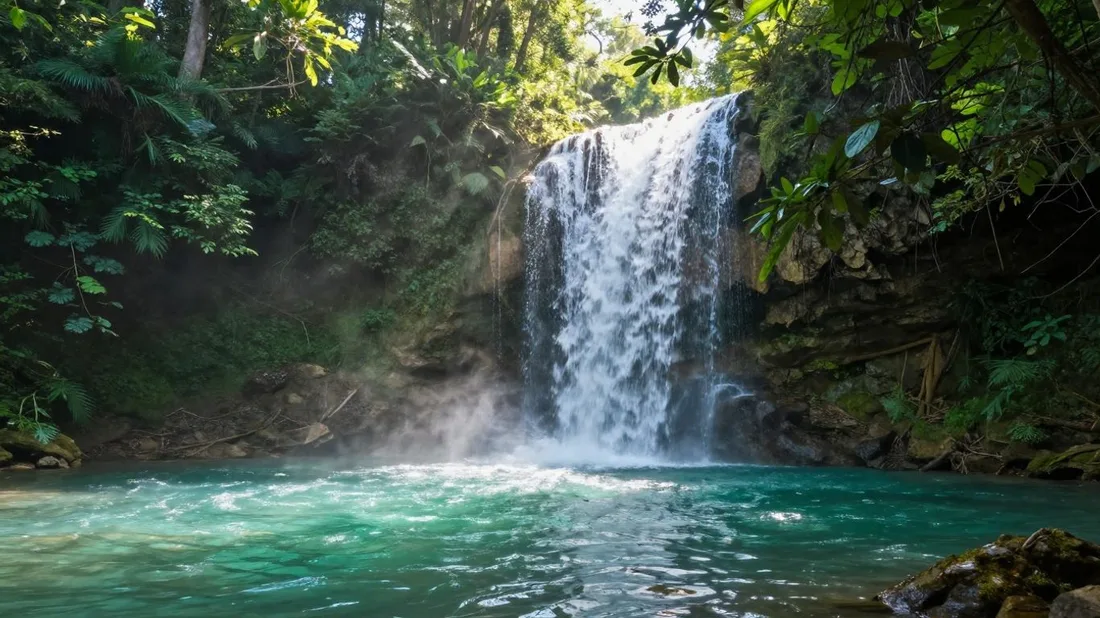
Public beaches, coastal walks, waterfalls, the Papeete market and the marae sites on Huahine and Raiatea cost little or nothing. Snorkeling from shore with your own mask is free wherever access is public; ask locally where currents are safe.
A sample three-week independent route
This route mixes ferries and flights and stays in pensions throughout.
Tahiti, 2 nights: arrive, use the bus to reach Papeete’s market and the coast, and eat at the roulottes.
Moorea, 4 nights: ferry across, rent a bike, hike the trails above Opunohu and snorkel from public beaches.
Huahine, 4 nights: take the Leeward ferry or fly. Huahine is small enough to cycle, and the marae at Maeva and the village of Fare are easy to reach.
Raiatea and Taha’a, 4 nights: base on Raiatea, visit the marae Taputapuātea (a UNESCO World Heritage site), and take a boat day to Taha’a.
Bora Bora or Maupiti, 3 nights: Maupiti suits budget travellers better, with a small number of pensions and a lagoon you can explore by kayak.
Rangiroa, 3 nights, then Tahiti, 1 night: fly to the atoll for the pass, then back to Tahiti for the flight home.
Our backpacking routes guide has more combinations. Check the ferry days before fixing the order, since a Leeward sailing only two or three times a week can shift the plan by a day or two.
Make the visit respectful
In family-run lodging you are a guest in someone’s home: ask about meal times, water use and visitors. Away from beaches, the Canadian advice suggests dressing conservatively and respecting religious traditions, which matters on Sundays in smaller villages. Buy from local markets and craftspeople, and avoid taking shells or coral.
Common planning mistakes
Promising yourself a fixed daily budget, improvising a bed on a small island in high season, and assuming hitchhiking, wild camping or work exchanges are allowed or practical.
Accessibility and individual needs
Ask pensions about shared bathrooms, steps, meal times and how far the property is from shops, because these details matter more on a budget trip than a star rating. Dengue is present, so pack repellent for daytime use.
After booking
Confirm airport or ferry pickup with each pension directly, since many hosts arrange transfers personally.
On the day
Carry enough cash and food for an extra day on remote islands, where a cancelled flight or limited shop hours can stretch a stay without warning.