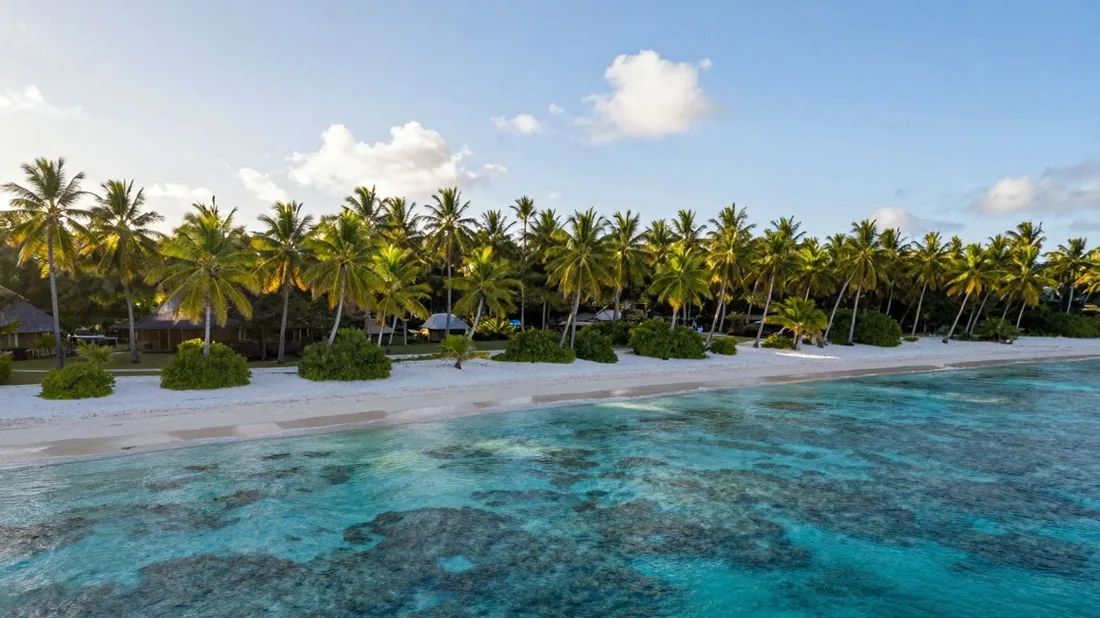
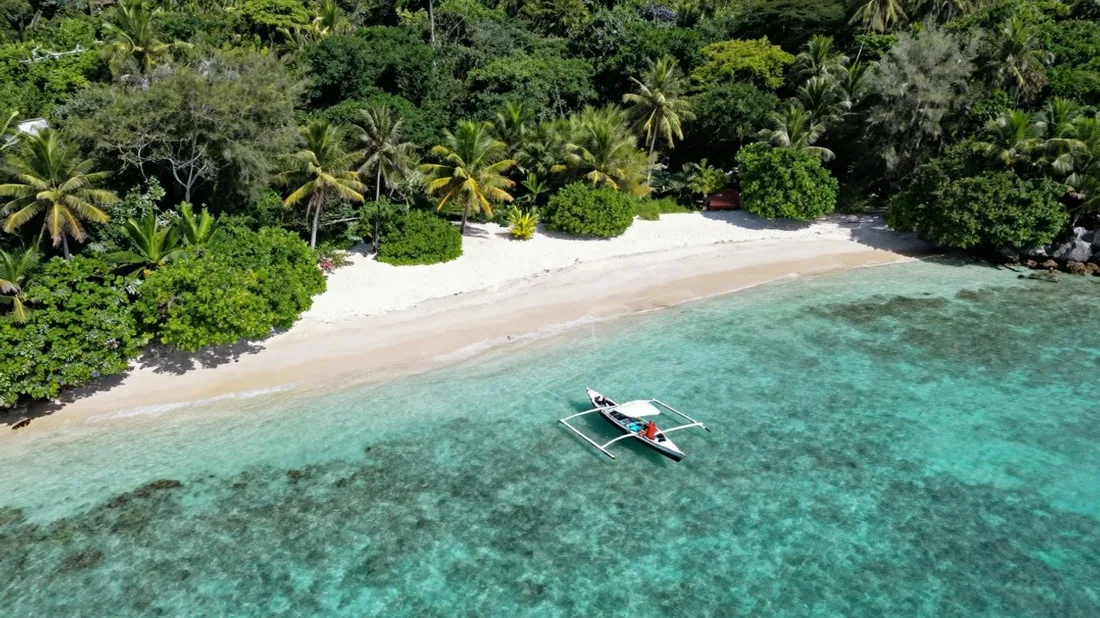
Almost every island in French Polynesia has good snorkeling, but the experience differs a lot. The Society Islands offer calm lagoon gardens close to the hotels. The Tuamotu atolls offer passes where sharks, rays and schools of fish ride the tide. The right choice depends on how confident you are in the water, how far you are willing to fly and what else you want from the trip.
Three kinds of snorkeling
Lagoon coral gardens are shallow, sheltered and suit most swimmers. Motu channels, the gaps between reef islets, often carry a gentle current that turns the swim into an easy drift. Passes, the openings through the reef to the ocean, carry the strongest currents and the biggest marine life, and are best done on a guided boat trip timed for the incoming tide.
Island by island
| Island | Known for | Level | Getting there |
|---|---|---|---|
| Moorea | Rays and blacktip reef sharks on the sandbanks; Tiahura coral garden; turtles | Beginner to intermediate | About 30 minutes by ferry from Papeete |
| Bora Bora | Lagoon tours with rays, reef sharks and coral gardens | Beginner | Flight from Tahiti |
| Taha’a and Raiatea | The Taha’a Coral Garden drift; Motu Ofetaro | Beginner to intermediate | Flight to Raiatea, then boat |
| Huahine | Coral garden near Fare; Avea Bay from the beach | Intermediate (current) | Flight from Tahiti |
| Maupiti | Manta ray cleaning station; coral gardens | Beginner to intermediate | Flight; limited seats |
| Rangiroa, Tikehau, Fakarava | Passes with sharks and big schools; clear lagoon water | Intermediate to advanced in passes | Flights from Tahiti and between atolls on set days |
Moorea
Moorea is the easiest snorkeling island to add to a Tahiti stay. Off the north-west coast, the shallow sandbanks near Motu Tiahura are known for blacktip reef sharks and pink whiptail rays, and the channel between Motu Tiahura and Motu Fareone has a good coral garden. Turtles are often seen off the same coast. Opunohu Bay’s public beach gives free shore access on the north side. Our Moorea guide covers where to stay for each.
Bora Bora, Taha’a and Huahine
In Bora Bora, most snorkeling is done on lagoon tours that stop at coral gardens and ray and shark sites. Taha’a’s Coral Garden, between two motu off the island’s west side, is one of the best drift snorkels in the Society Islands: you walk to the top of the channel and let the current carry you over coral heads. Huahine’s coral garden near Fare is excellent but can run with a strong current, so watch the locals and stay close to shore.
Maupiti
Maupiti’s lagoon has a manta ray cleaning station in less than 10 metres of water, according to Tahiti Tourisme’s Maupiti page, so snorkelers can watch from the surface when the mantas are present. The island has a single dive centre and small pensions, so book ahead.
The Tuamotu atolls
The atolls offer the clearest water and the biggest encounters. In Rangiroa, boats run drift snorkels through Tiputa pass on the incoming tide and day trips to the Blue Lagoon, a shallow lagoon within the lagoon. Fakarava’s south pass at Tetamanu is famous for its “wall of sharks” and has a strong incoming current, while Garuae, the north pass, is the widest in French Polynesia, as Tahiti Tourisme’s Fakarava guide describes. Fakarava is part of a UNESCO biosphere reserve. Tikehau is smaller and quieter, with lagoon outings arranged by the pensions. See our Fakarava guide for a closer look.
Building the route
Moorea and Bora Bora fit easily into a Society Islands circuit, while the atolls work best as a separate block of several nights, because flights between archipelagos run on particular days. An Air Tahiti multi-island pass can combine both, and our island-hopping guide shows sample sequences.
Gear and conditions
Lagoon tours provide masks, snorkels and often fins, but a mask that fits your face makes a big difference, so bring your own if you have one. Add a rash guard or a thin wetsuit top for sun protection and warmth on long drift snorkels, and reef shoes for entering from shore over rubble. A small dry bag keeps phones and room keys safe on the boat.
Wind affects visibility and comfort more than anything else. The sheltered side of an island and the water close to motu stay calmer when the trades blow, and mornings are often clearer. In the passes, everything depends on the tide, which the operator will plan around.
Make the visit respectful
Keep your distance from rays, sharks and turtles, and never touch or stand on coral. Don’t feed wildlife, even where others do. On drift snorkels, stay with the group and follow the guide’s exit point rather than swimming against the current over the reef.
Common planning mistakes
Declaring one island the best for everyone, booking a pass snorkel for a weak swimmer, and leaving the atolls to the last two nights when a cancelled flight would cut them out.
Accessibility and individual needs
Families should look for calm lagoon gardens and guided boat trips with flotation vests, and leave current-swept passes to confident adults. Many Moorea and Bora Bora hotels have snorkeling directly from the beach or pontoon. Ask whether a boat has a ladder or a swim platform if climbing back aboard is hard.
After booking
Before a pass snorkel in the Tuamotus, ask the operator about the tide and current for that day, since conditions in the passes change quickly.
On the day
If the passes are too strong, a lagoon garden, a shallow motu edge or a glass-bottom boat can replace the planned drift.
Use this guide for trip ideas, not a current quotation or a guarantee of access, safety, inclusions or availability. Confirm the requirements and conditions for your dates, destination and provider before booking.