This guide helps travelers decide how Bora Bora and Tahiti should share time in one itinerary.
Why this deserves a place in the plan
Tahiti and Bora Bora serve different roles. Tahiti is the international gateway with Papeete, markets, museums and a large mountainous interior; Bora Bora centers more heavily on its lagoon and resort experience.
Choose the experience first
Choose according to pace and interests rather than reputation. Travelers seeking urban energy, road exploration and cultural stops may want more Tahiti time; lagoon-focused stays may place more nights in Bora Bora.
Build it into the itinerary
Account for the domestic-flight connection, airport transfers and the possibility that arrival times consume part of a day. A balanced itinerary protects the first and last nights from tight connections.
A common split puts one or two nights on Tahiti around the international flights and the rest of the stay on Bora Bora, with the domestic flight and airport boat transfer counted as part of a travel day.
Details to verify before booking
Confirm domestic schedules, baggage rules, transfer arrangements and room availability for the actual dates. Compare the whole trip cost rather than room prices alone.
The two islands side by side
| Tahiti | Bora Bora | |
|---|---|---|
| Role | International gateway and the largest island, home to the capital, Papeete | Lagoon and resort island in the Leeward Society Islands |
| Getting there | Long-haul flights land at Faa’a, about 5 km from Papeete | About 50 minutes by air from Tahiti; the airport is on Motu Mute, then a boat to the main island or your resort |
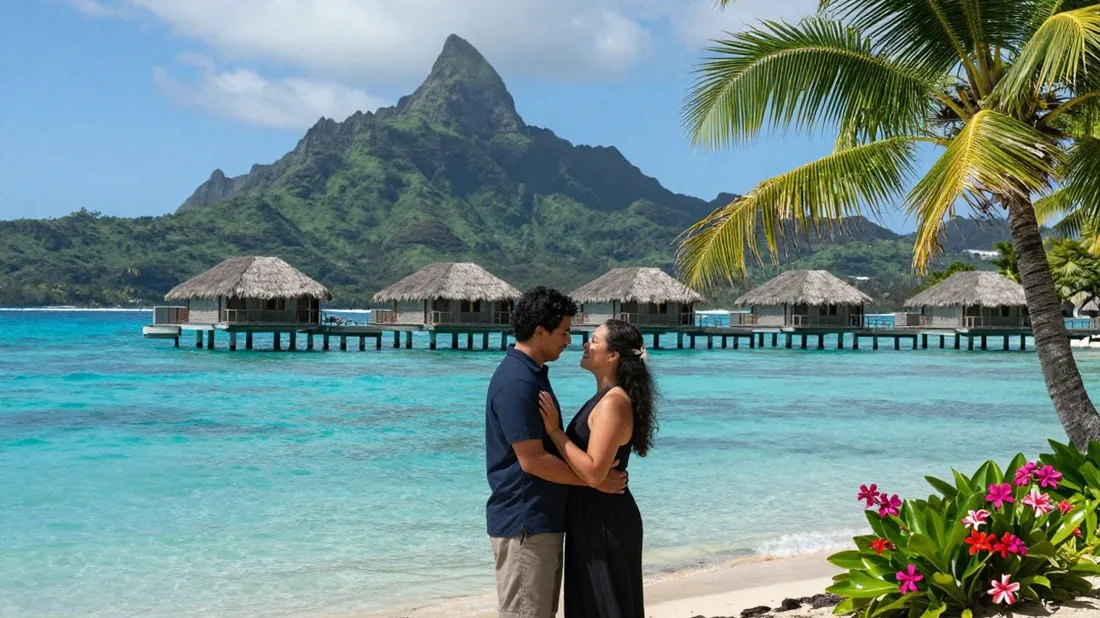
| Landscape | High mountains, deep valleys, waterfalls, black- and white-sand beaches | Mount Otemanu rising over a wide lagoon ringed by motu |
| Best for | Markets, museums, road trips, hiking, surf watching, local food | Lagoon tours, snorkeling, overwater stays, quiet time |
| Accommodation | City hotels, west-coast resorts, pensions | Overwater resorts on the motu, plus hotels and pensions on the main island |
| Getting around | Rental car, taxi or bus | Resort boats, plus bike, scooter or car on the main island |
What Tahiti does better
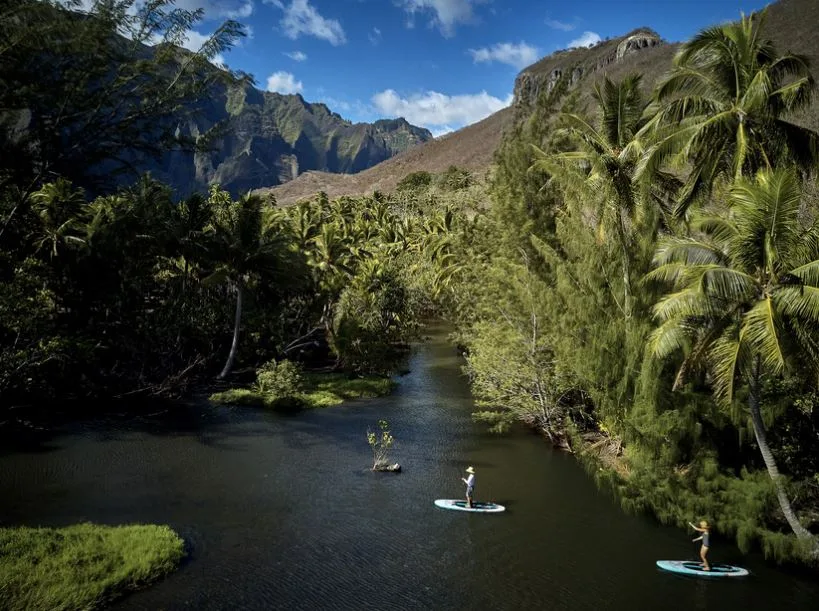
Tahiti is where you see everyday Polynesian life. Tahiti Tourisme describes Papeete’s lively market, museums and pearl shops, and a mountainous interior of valleys, rivers and waterfalls left largely untouched because most people live on the coast. A drive around the island takes in black-sand Pointe Vénus, the waterfalls on the east coast and the Tahiti Iti peninsula toward Teahupo’o, known for one of the world’s heaviest surf waves. The Musée de Tahiti et des Îles in Punaauia is the best single introduction to the islands’ history. In July, Heiva fills Papeete with dance and music.
It is also the easier island for travellers watching their spending, with a wider range of hotels, supermarkets and food trucks (roulottes), and rental cars that make independent exploring simple. See our Tahiti island guide for routes and stops.
What Bora Bora does better
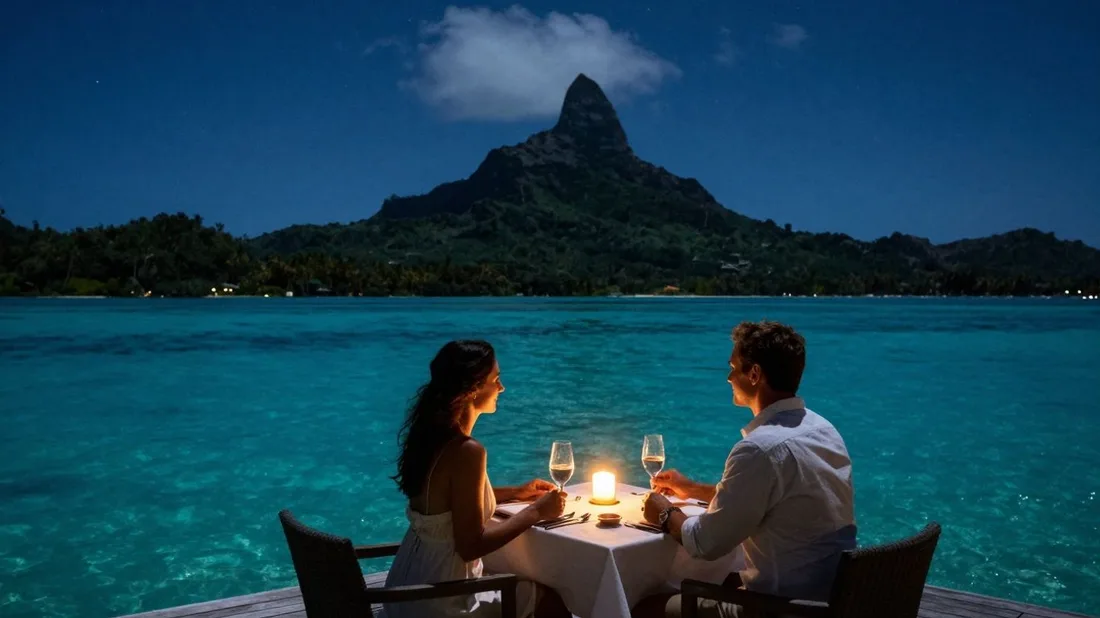
Bora Bora is about the lagoon. Tahiti Tourisme’s Bora Bora page lists lagoon tours with rays and sharks, motu picnics, sunset cruises and helicopter flights over Mount Otemanu, and notes that many hotels lend kayaks, paddleboards and snorkel gear. Matira Beach is the main public beach. On land, guided 4x4 tours visit marae and the coastal guns left from Operation Bobcat, the American base set up during the Second World War.
The trade-off is cost and independence. Many guests on the motu take most meals at their resort and rely on resort boats to reach the main island, which adds up; our Bora Bora travel costs page breaks this down. On arrival, the airport is on a motu. Air Moana, for example, runs a free shuttle boat for its passengers to Vaitape, about 15 minutes away, as Air Moana explains, while motu resorts collect guests by boat.
When the weather turns
A rainy day affects the two islands differently. On Tahiti there is plenty to do under cover: the museum, the market, pearl shops and a long lunch in Papeete. On Bora Bora, wet or windy weather can cancel lagoon tours, and options narrow to the spa, the resort and a drive on the main island. Moorea sits between the two, with lagoon days, valley drives and an easy ferry back to Tahiti. In the wetter months from November to April, a few extra nights on the island with more land-based options gives the trip more resilience.
Sample ways to split the time
- Seven nights, lagoon focus: one night on Tahiti after the international flight, six on Bora Bora.
- Seven nights, two styles: one night on Tahiti, three on Moorea by ferry, three on Bora Bora.
- Ten nights: two nights on Tahiti with an island drive and the museum, three on Moorea, five on Bora Bora.
- Fourteen nights: add Taha’a, Huahine or an atoll such as Rangiroa between Bora Bora and the return to Tahiti.
Long-haul flights often arrive on Tahiti late at night and leave late in the evening, so a Tahiti night at each end of the trip, or a day room before departure, keeps the schedule comfortable. When three or more islands are involved, a multi-island Air Tahiti pass can make the domestic flights simpler to book.
Make the visit respectful
Give both destinations enough time to be experienced on their own terms. Use locally operated activities and follow cultural and environmental guidance at each stop.
Common planning mistakes
Avoid treating Tahiti as only an airport or Bora Bora as the only worthwhile island. A rushed split can deliver more transit than enjoyment.
Accessibility and individual needs
Travelers with limited mobility should compare the two: Tahiti has more road-based sightseeing, while Bora Bora stays often depend on boat transfers and overwater walkways.
After booking
Recheck the domestic flight time between Tahiti and Bora Bora a few days before travel, since a schedule change can affect the resort boat pickup and the first evening.
On the day
Keep at least one Tahiti day loosely planned so that a delayed arrival or a rainy morning does not cost the market, museum or island-drive time.