Tahiti and her islands suit older travellers well when the trip is built around fewer island changes, short daily outings and rooms chosen for easy access. The main pressure points are long-haul arrival times, boat and ferry boarding, overwater stairs and ladders, midday heat, and limited medical care on remote islands. Plan for those up front and the pace takes care of itself.
Build the route around fewer moves
Every island change in French Polynesia means packing, a transfer, a check-in queue and usually a wait. For a relaxed pace we suggest two islands, or three at most, on a ten- to fourteen-day trip, with at least three or four nights on each.
- Tahiti plus Moorea is the easiest pairing: Moorea is reached by ferry from Papeete, so there is no second airport check-in.
- Tahiti, Moorea and Bora Bora adds one domestic flight and works well if you rest on arrival days.
- Remote archipelagos such as the Marquesas or Austral Islands are rewarding but involve longer flights, simpler lodging and fewer services, so they suit travellers who are confident on uneven ground.
Avoid scheduling an excursion on the day you arrive on a new island. Use it to settle in, find the shade and learn the layout of the property. Our French Polynesia itinerary ideas show how to space islands sensibly.
Arrival day and airport assistance
Long-haul arrival times at Faa’a International Airport vary, and some land late at night or very early in the morning. Book a room you can use on arrival, even if that means paying for an extra night, so you are not waiting hours for check-in after a long flight.
If walking long distances is difficult, request help when you book, not at the airport. Air Tahiti Nui’s assistance page explains that it offers airport and in-flight assistance and carries wheelchairs and mobility equipment free of charge, and it asks for details of personal wheelchairs at the time of booking, at least 48 hours before departure. Battery-powered wheelchairs need their battery specifications approved in advance. If your trip includes other airlines, check each carrier’s own rules, because assistance requests do not always transfer between airlines.
Pack medication in your carry-on in original containers with a copy of your prescriptions, and bring enough for a few extra days in case of a weather delay.
Ferries and boats: boarding is the hard part
The crossings themselves are usually comfortable; getting on and off is where people need care. The Tahiti to Moorea ferries dock at proper terminals with gangways, which is far easier than climbing into a small boat from a beach.
Aremiti’s conditions of transport ask all passengers to arrive at least 30 minutes before departure, and passengers with reduced mobility to report to staff at least 45 minutes before departure and to mention their needs when buying tickets. Build that into your morning rather than rushing from a hotel.
Lagoon tours are different. Many leave from a beach or small dock, use boats with a step or short ladder, and stop at motu (islets) where you wade ashore through shallow water. Before you book, ask the operator:
- Does the boat board from a dock or from the beach?
- Is there shade and a seat with a back for the whole outing?
- Are there wet landings, and how deep is the water?
- Is there a ladder or platform for getting back aboard after snorkelling?
- How long is the tour, and is there a toilet on board?
A private or small-group boat costs more but lets the skipper adjust the pace and keep stops short.
Choosing rooms: stairs, ladders and distances
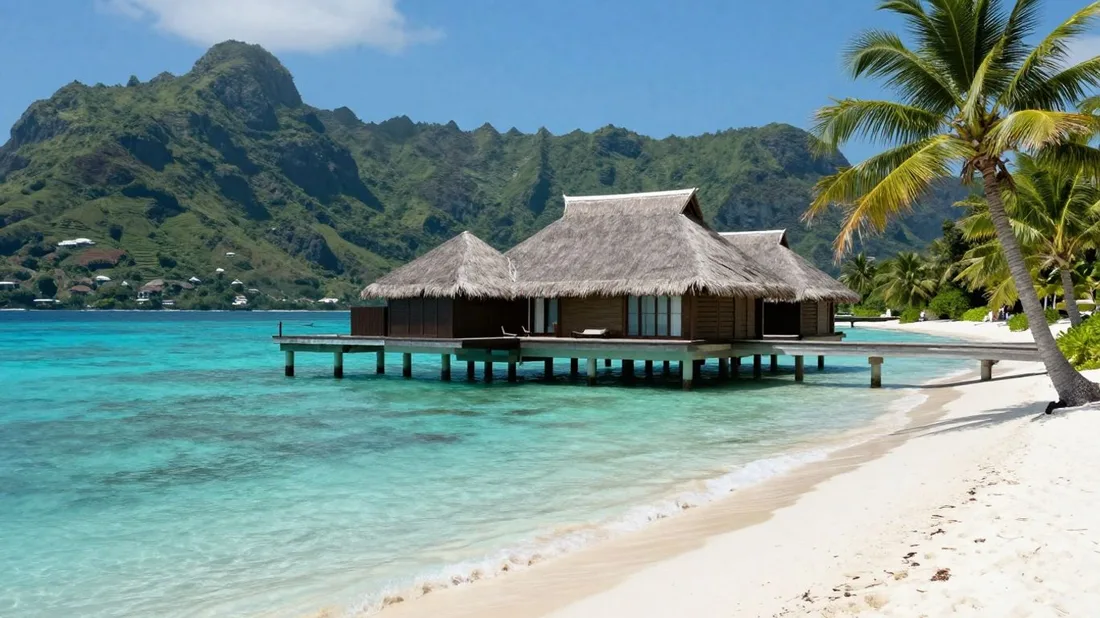
Overwater bungalows are the image most people have of Tahiti, but they come with walking. Long wooden pontoons can mean several hundred metres between your room and the restaurant, and the lagoon ladder is often steep. Some resorts offer buggy rides; ask whether that service runs at all hours.
Points to confirm before booking:
- Accessible rooms: Tahiti Tourisme’s hotel listings note how many rooms are adapted for guests with reduced mobility. For example, its listing for the Hilton Moorea Lagoon Resort & Spa shows two such rooms and a shower with a seat. These rooms are few, so request them early.
- Steps into the bungalow and bathroom: ask for photos or a floor plan, and ask whether the shower is a walk-in or a tub.
- Distance to dining: a garden or beach bungalow close to the main building can make evenings much easier.
- Guesthouses: family-run pensions are warm and personal but may have outdoor bathrooms, steps and limited lighting on paths.
Heat, sun and the daily rhythm
The islands are warm and humid all year, and the sun is strong. The easiest daily pattern for most older travellers is an outing in the early morning, a long shaded break through the middle of the day, and a short walk or relaxed dinner in the evening.
- Drink water steadily; coconut water and fresh fruit juice are easy to find and help with fluids.
- Wear a wide-brimmed hat, a long-sleeved sun shirt in the water and reef-friendly sunscreen.
- Use reef shoes. Coral rubble and slippery rocks cause more falls than anything else in the lagoon.
- Carry a light rain layer; tropical showers come and go quickly, especially from November to April.
Swim within your comfort level. Canada’s travel advice for French Polynesia notes that lifeguards don’t usually supervise beaches and that tidal changes can create strong currents. A flotation vest on snorkel trips is sensible, not a sign of weakness.
Health care and insurance
The same Government of Canada page describes health care as good on the major islands but limited in remote or less-populated areas, notes that providers may ask for payment up front, and warns that medical evacuation can be very expensive. Its advice is to carry travel insurance that covers evacuation. Dengue is present, so use insect repellent, especially around sunrise and sunset.
For travellers with ongoing conditions:
- See your doctor several weeks before departure about vaccines, medications and fitness for long flights.
- Carry a short medical summary in English and, if possible, French.
- Keep the emergency medical number, 15, in your phone.
- Read the policy details on pre-existing conditions and age limits. Our guide to French Polynesia travel insurance covers what to check.
Easy-pace experiences worth booking
| Experience | Why it suits an easy pace | What to ask |
|---|---|---|
| Glass-bottom or lagoon cruise | See coral and fish without swimming | Shade, seating, dock boarding |
| Guided island drive | Viewpoints, markets and craft stops by vehicle | Vehicle type, length of walking at stops |
| Papeete market morning | Flat, covered, close to the waterfront | Go early, before the heat |
| Pearl farm visit | Short, seated explanation and shopping | Boat transfer or road access |
| Polynesian dance show with dinner | Evening culture without travel | Seating, distance from your room |
A half-day outing every second day leaves time to rest and still see a great deal.
Planning notes
Decide your number of islands first, then request airport assistance and accessible rooms at booking time, and confirm boarding details for each boat outing before you pay. Keep insurance with evacuation cover. Our trip planning page and the French Polynesia travel planning guide walk through the next steps, and Far & Away Adventures can arrange the whole route at a comfortable pace.
Frequently asked questions
Is Tahiti a good destination for travellers in their 70s or 80s?
Yes, for travellers comfortable with warm weather and some walking. Keep island changes few, choose rooms near the main building and book boat outings that board from a dock.
Are senior discounts available on ferries or tours?
Some local fares are labelled for seniors, but ferry price lists often separate resident and tourist fares. Ask the operator which fare applies to visitors and bring ID showing your age.
Should I avoid overwater bungalows?
Not necessarily. Ask how far the bungalow is from the restaurant, whether buggy service is available and how many steps there are. A bungalow close to shore is often a good compromise.
Use this guide for trip ideas, not a current quotation or a guarantee of access, safety, inclusions or availability. Confirm the requirements and conditions for your dates, destination and provider before booking.